
Energy consumption has become one of the most critical evaluation metrics in industrial shot blasting. As manufacturers seek greater productivity while lowering operating costs, energy-efficient shot blasting machines are no longer optional—they are essential. Airo Shot Blast, recognized for its innovative blast machines, puts significant focus on engineering designs that reduce power usage without compromising performance.
This article explores how different shot blasting machines compare in terms of energy consumption, what influences power demand, and how modern systems deliver better efficiency.
Understanding Energy Consumption in Shot Blasting
Shot blasting machines rely on high-energy systems—motors, compressors, blowers, and dust collectors—to achieve desired surface preparation outcomes. These systems consume electricity at different intensities depending on machine design and application.
Why Energy Efficiency Matters Today
Energy costs account for up to 40% of the total operational expenditure in blasting workshops. High consumption not only increases expenses but also:
Raises environmental impact.
Accelerates component wear.
Reduces machine life due to heat stress.
Limits production efficiency.
With rising industrial electricity tariffs, energy-optimized shot blasting machines provide a significant competitive edge.
Key Factors That Influence Power Use
Several variables determine how much energy a shot blasting machine consumes:
Blast wheel or compressor power rating.
Size and design of the blast chamber.
Media size and flow rate.
Dust collector horsepower.
Duty cycle and blasting duration.
Workpiece hardness, size, and surface profile requirements.
Categories of Shot Blasting Machines
Different shot blasters exhibit different power profiles. Understanding each allows buyers to make smarter energy-based decisions.
Wheel Blast Machines
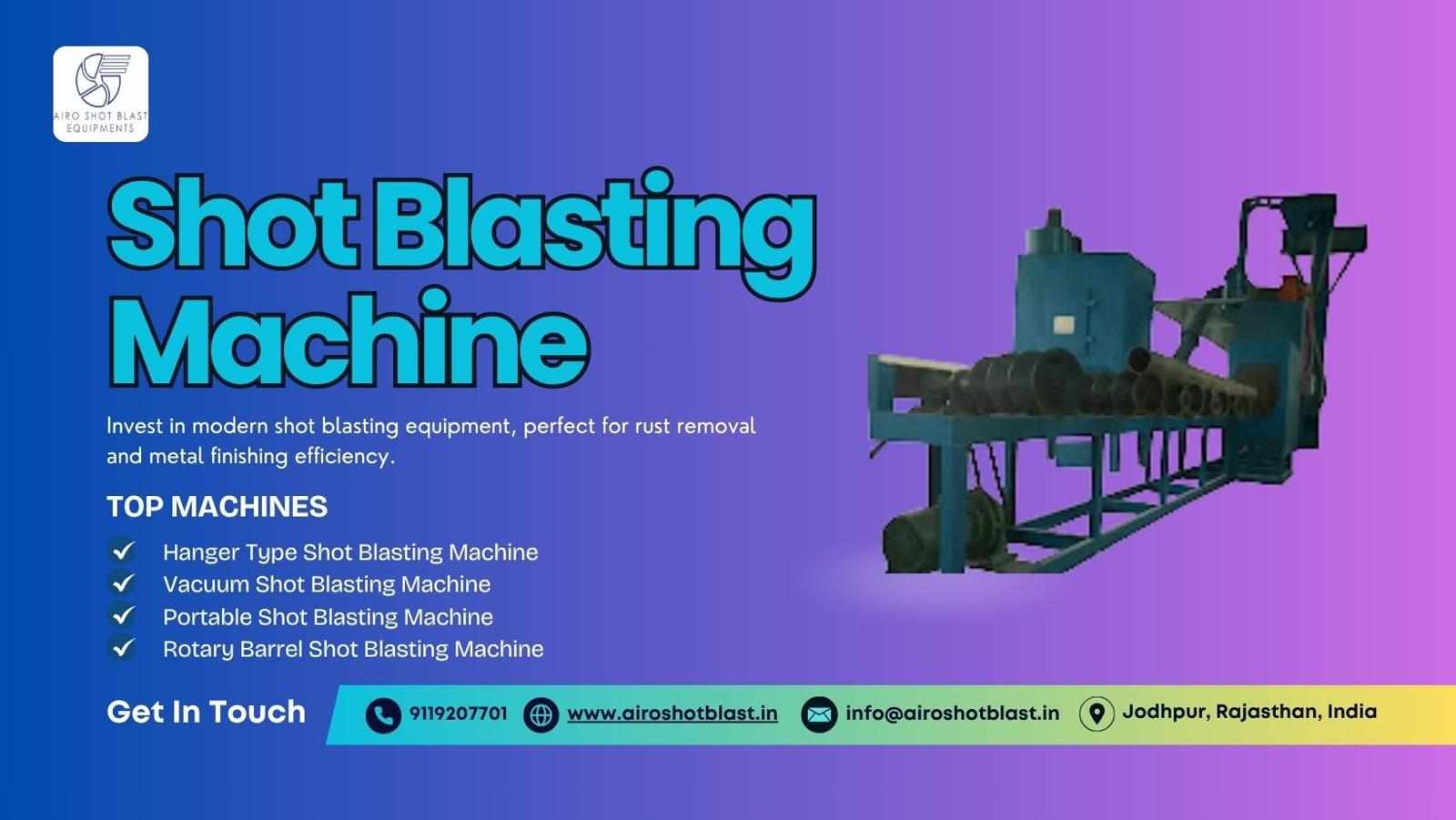
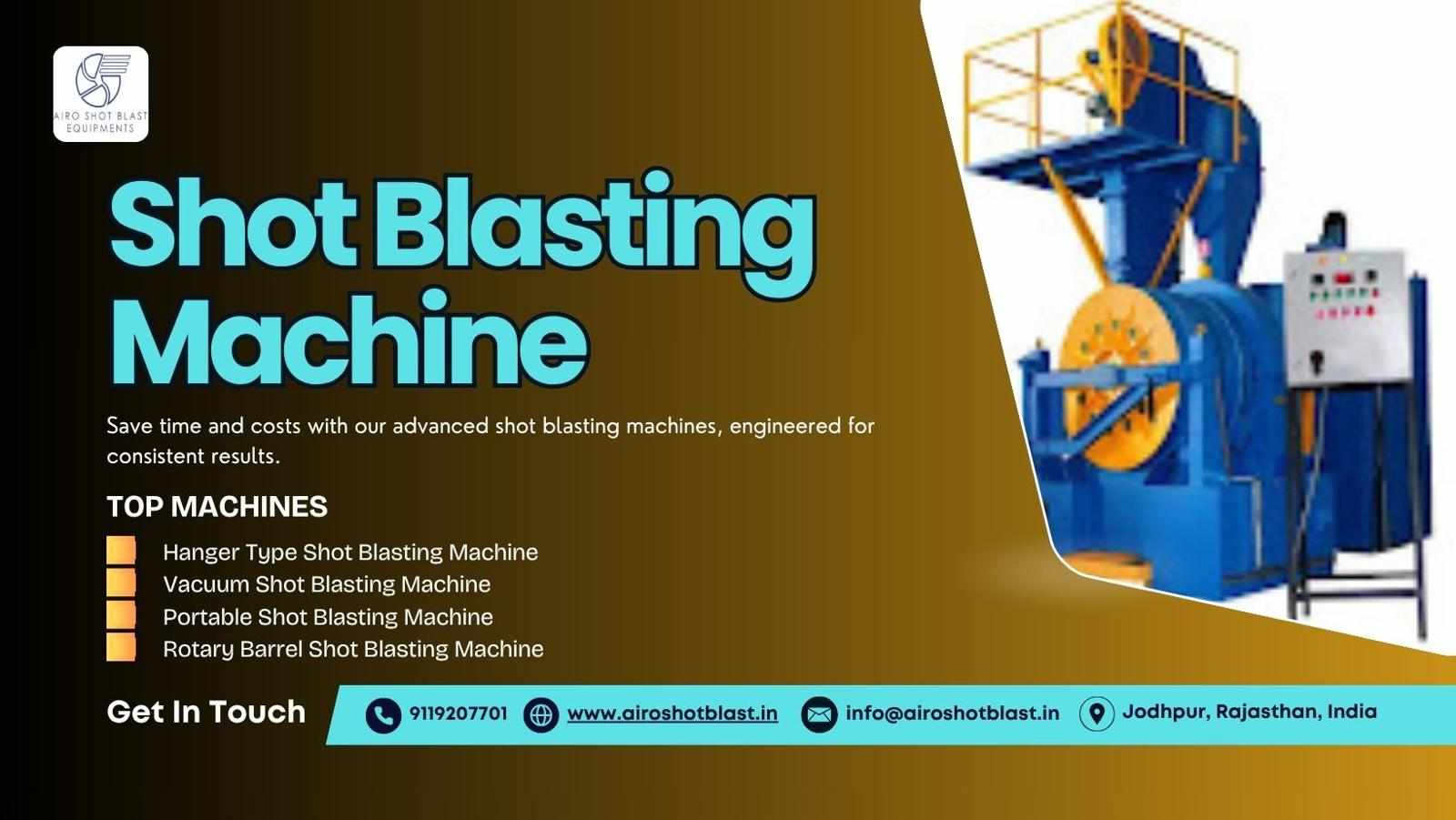
Wheel blast systems use a motor-driven blast wheel to accelerate abrasive media at high velocity.
Energy Characteristics of Wheel Blast Units
Power consumption typically ranges from 7.5 HP to 75 HP per wheel.
Most machines use multiple wheels, increasing total load.
Efficiency depends on wheel design, blade wear, and media type.
These machines consume less power per square meter cleaned compared to air blast systems.
Wheel blast machines are ideal for high-volume industrial applications due to their superior energy-to-output ratio.
Also Check - Shot Blasting Machine Manufacturers in India
Air Blast Machines
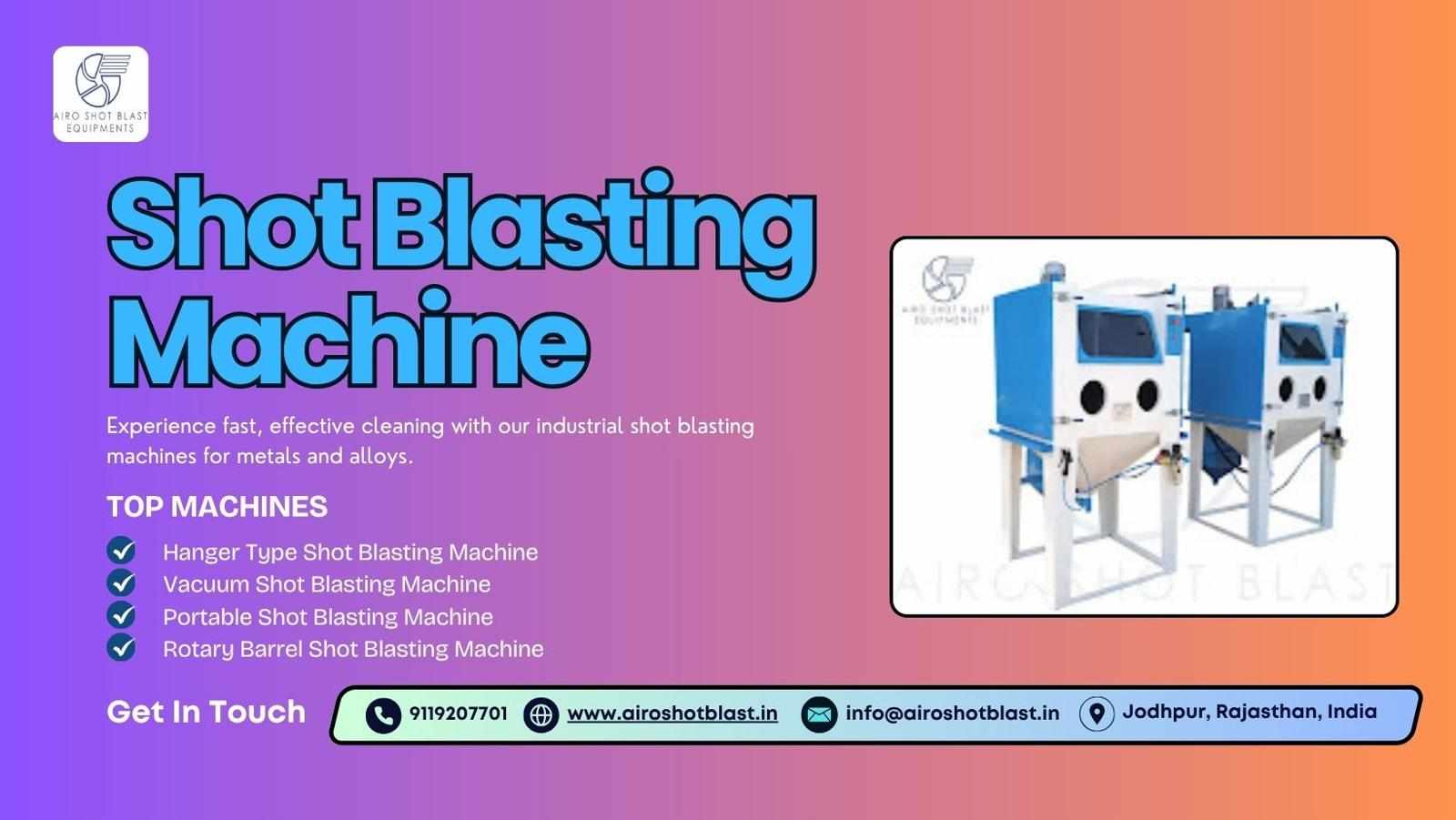
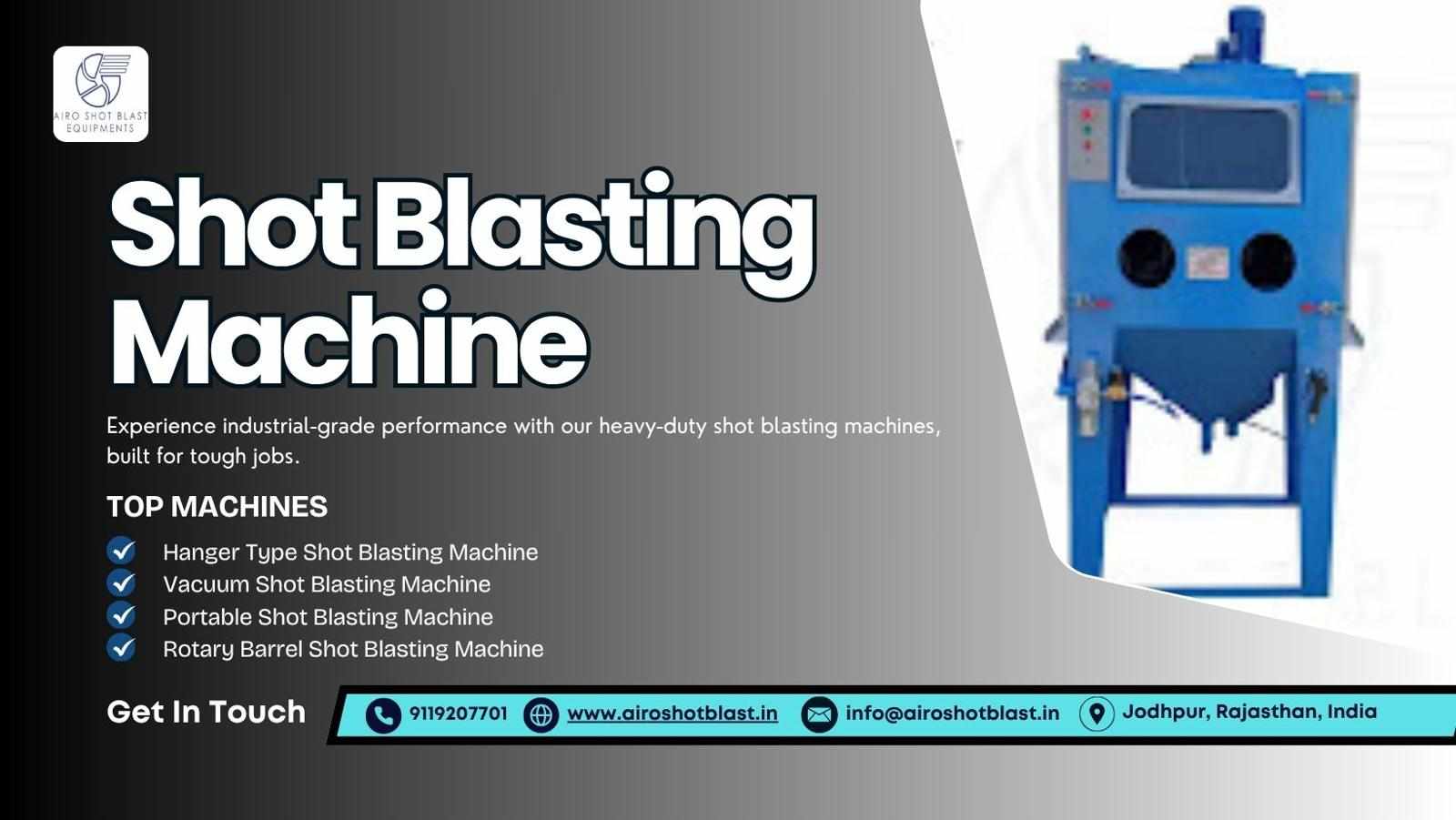
Air blast systems rely entirely on compressed air to propel abrasive at the workpiece.
Energy Characteristics of Air Blast Units
Compressors demand extremely high energy: 15–200 HP, depending on airflow and pressure.
Air blast systems use far more electricity than wheel blast machines.
Best suited for precision applications where control, not speed, is the priority.
Energy efficiency drops as nozzle wear increases or when pressure is set unnecessarily high.
Portable Shot Blasting Machines
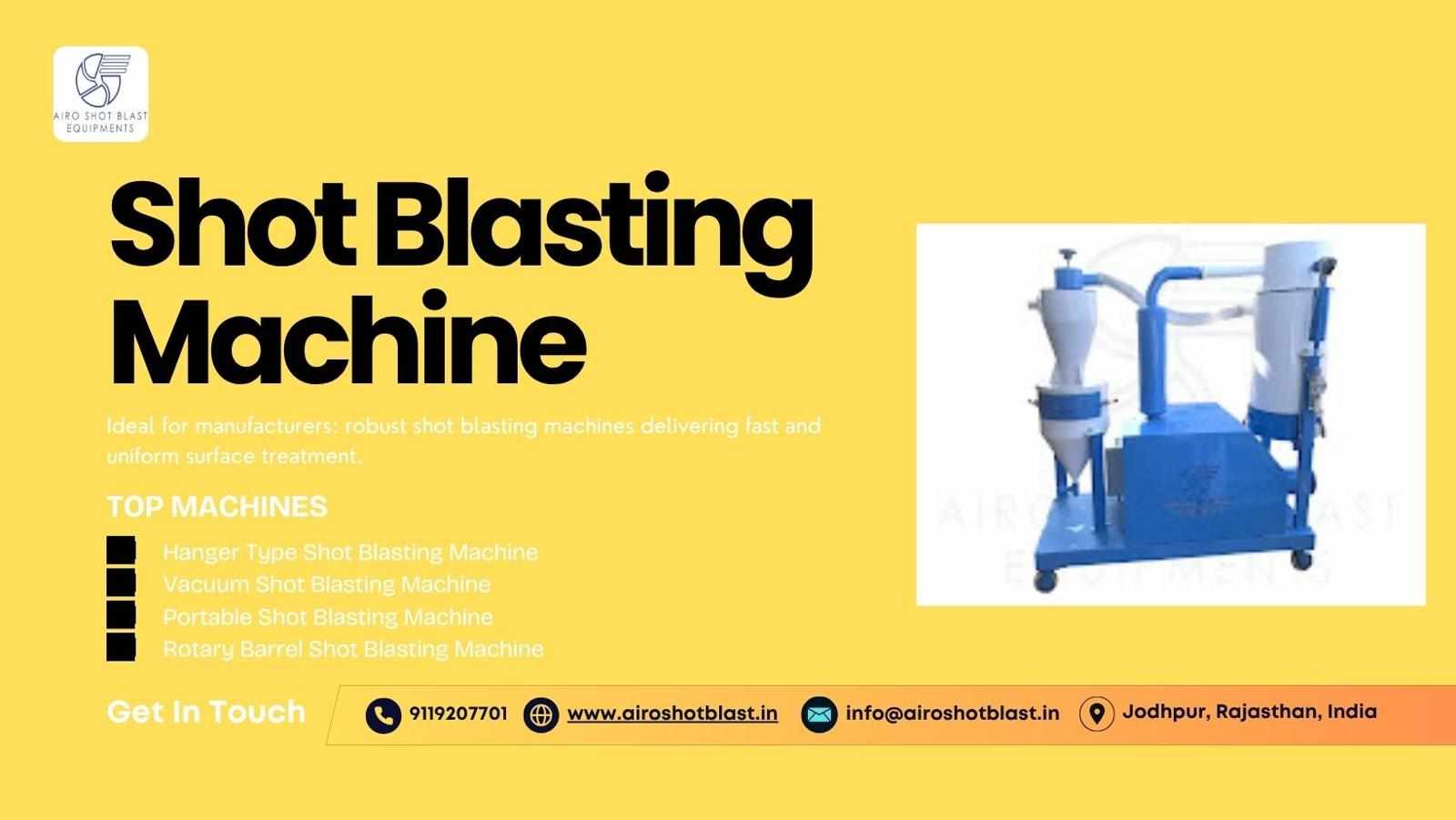
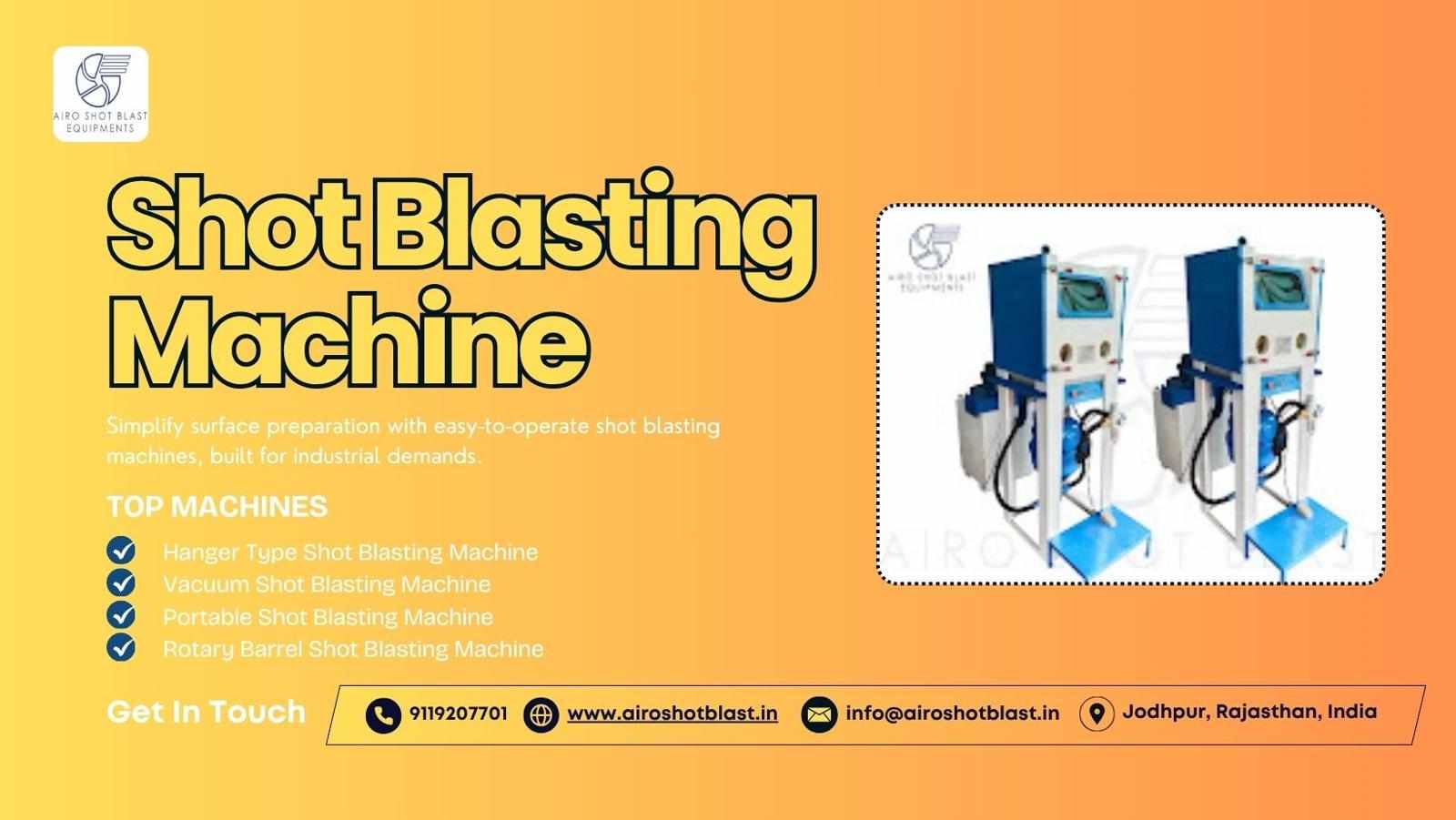
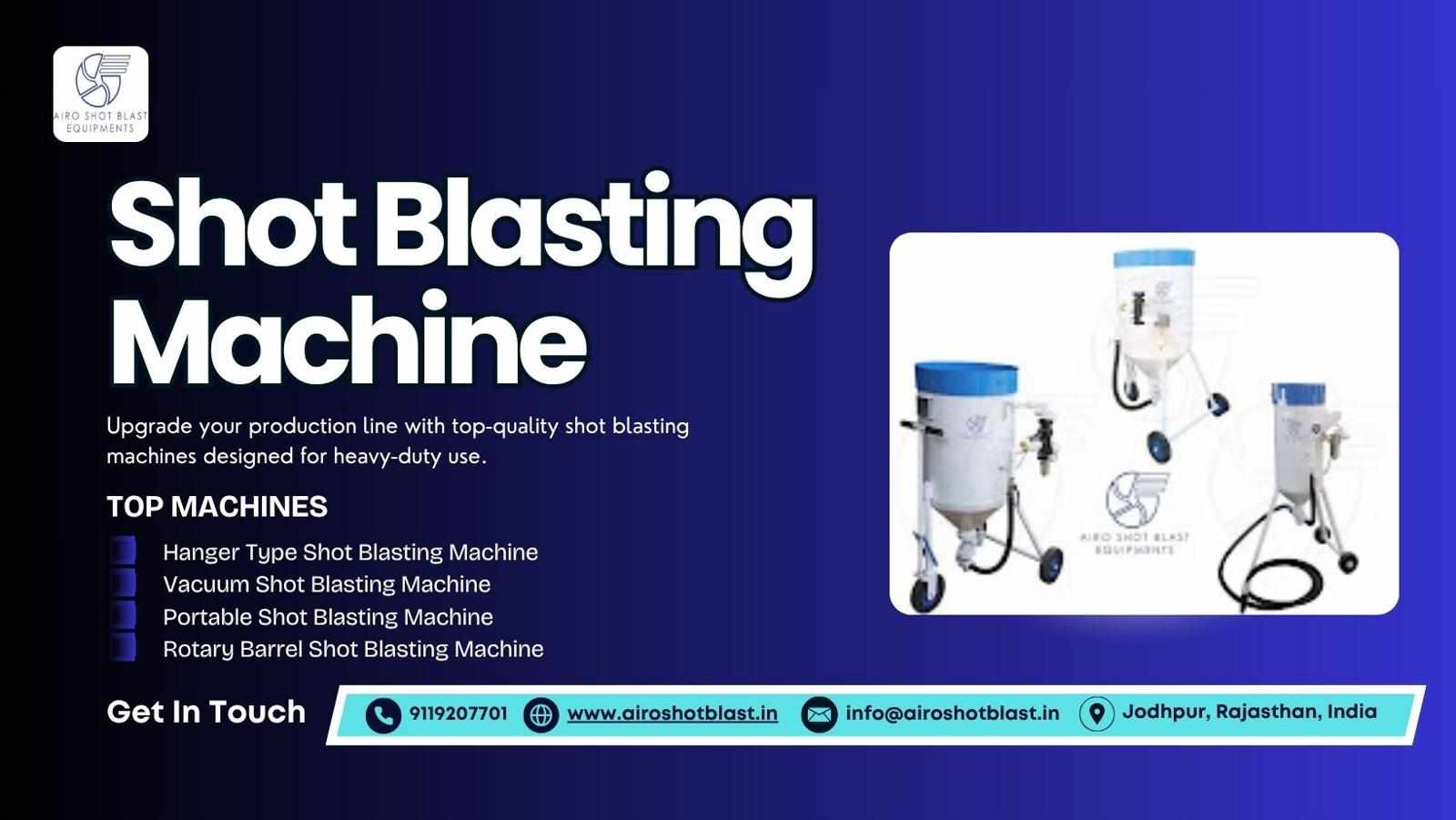
Portable or open-type machines are widely used for on-site blasting operations.
Typical Power Requirements
Require high-capacity air compressors (70–250 CFM).
No dedicated motors but depend heavily on compressed air systems.
Energy consumption varies widely based on nozzle size and pressure requirements.
Dust collectors (optional) add additional load.
Automatic vs. Manual Shot Blasting Setups
Automation plays a significant role in energy optimization.
Differences in Consumption
Automatic PLC-controlled machines reduce unnecessary runtime.
Manual machines often consume more due to inconsistent usage patterns.
Automated media flow control reduces wasted energy.
Comparative Energy Analysis
This section breaks down how different machine types stack up.
Motor Power and Blast Wheel Speed
Wheel blast machines win in efficiency because:
Blast wheels have direct transfer of mechanical energy.
Lower energy losses compared to compressed air systems.
Adjustable wheel RPM helps optimize consumption.
Compressed Air Requirements
Air blast units have:
The highest energy consumption.
Constant load on the compressor.
Significant losses due to air leaks and nozzle wear.
Media Flow Rate Impact
Higher flow requires:
More motor strength (wheel blast).
Higher air pressure (air blast).
Inefficient media flow dramatically increases power consumption.
Workload and Operating Environment
Dusty environments increase dust collector load, raising energy use by 10–20%.
Heavy rust or mill scale requires:
Higher media velocity.
Longer blasting time.
More machine runtime.
Also Check - Shot Blasting Machine Price
How Energy Efficient Designs Reduce Power Loads
Abrasive Recycling Systems
Modern recycling systems reduce energy by:
Maintaining clean media flow.
Reducing wear on motors and compressors.
Lowering dust collector workload.
Intelligent Control Panels (PLC Automation)
PLC systems from Airo Shot Blast enable:
Auto-start/stop cycles.
Real-time energy monitoring.
Reduced idle motor and compressor time.
High-Efficiency Dust Collectors
Improved airflow design reduces:
Blower load.
Filter resistance.
Power consumed during extended blasting cycles.
Design of Blast Cabinets and Chambers
Optimized internal geometry ensures:
Less media wastage.
More effective blasting per cycle.
Reduced operating time for achieving the same finish.
Case Comparison: High-Efficiency vs. Standard Machines
Example 1: Wheel Blast Efficiency Gain
A standard 11 kW blast wheel vs. a high-efficiency 11 kW wheel:
High-efficiency wheel provides 15–20% more abrasive velocity.
Achieves faster cleaning in less time.
Cuts total energy consumption per workpiece by up to 30%.
Example 2: Air Blast Savings in Maintenance Cycles
Upgraded nozzles and smart valves can reduce compressed air demand by:
10–15% through cleaner air pathways.
25% savings when combined with automated air pressure control.
Up to 40% savings when using high-efficiency compressors.
Read More - https://yashk1047820.stck.me/post/1466522/Comparing-Blast-Wheel-RPM-Across-Different-Machine-Types
What to Consider When Choosing an Energy-Efficient Shot Blaster
Required Surface Profile
Higher profiles require more aggressive media and higher power.
Material Type and Workload
Hard metals demand greater energy for proper impact force.
Expected Production Speed
High-production environments benefit from wheel blast systems.
Long-Term Operational Cost Analysis
Buyers should evaluate:
Power usage per hour.
Energy cost per workpiece.
Component wear impact on energy demand.
Why Airo Shot Blast Leads in Low-Energy Designs
Airo Shot Blast machines consistently achieve lower energy consumption due to advanced engineering.
Advanced Motor Efficiency Standards
Motors comply with IE2/IE3 standards, reducing electricity usage.
Optimized Air Filtration Technology
Dust collectors use smart airflow systems that minimize resistance and blower load.
Smart Media Flow Control Systems
These regulate media delivery, ensuring:
Better impact efficiency.
Reduced wastage.
Lower motor or compressor strain.
Conclusion
Energy consumption plays a defining role in selecting the right shot blasting machine. From blast wheel designs to compressor efficiency and dust collection systems, every component influences electricity usage. Wheel blast machines remain the most energy-efficient option for high-volume operations, while air blast systems offer precision at higher energy costs.
With innovations in automation, abrasive recycling, and airflow management, Airo Shot Blast continues to lead the industry in low-energy shot blasting solutions. Investing in an energy-optimized shot blasting machine not only cuts costs but also enhances production speed, consistency, and long-term value.
FAQs
1. Which type of shot blasting machine consumes the least energy?
Wheel blast machines consume significantly less energy compared to air blast systems.
2. Why do air blast machines use more electricity?
They rely on high-capacity compressors, which require substantial power to generate pressure.
3. Do portable blasting machines consume more energy?
They often do because they depend heavily on air compressors and may run longer for the same finish.
4. Can automation help reduce energy consumption?
Yes. PLC automation minimizes idle run time and optimizes motor and compressor usage.
5. How does Airo Shot Blast improve machine energy efficiency?
Through advanced motors, optimized airflow, intelligent media control, and engineering enhancements that reduce operational load.





Write a comment ...