
In the world of industrial surface preparation, blast wheel RPM plays a decisive role in determining speed, efficiency, and final finish quality. Whether you are operating a hanger type, tumble blast, table type, or pipe cleaning shot blasting machine, the RPM (Revolutions Per Minute) of the blast wheel dramatically shapes how abrasives impact the workpiece. At Airo Shot Blast Equipments, understanding RPM variations is central to designing machines that deliver high throughput, superior finish, and longer machine life.
This article breaks down how RPM differs across machine types, why these differences matter, and how to select the right RPM range for your application.
Why Blast Wheel RPM Matters
Before comparing machine types, it is important to understand the significance of RPM.
A blast wheel’s RPM directly influences:
Abrasive Velocity – Higher RPM increases impact speed, intensifying cleaning or peening.
Surface Coverage – Faster RPM widens or narrows the blast pattern depending on wheel design.
Material Removal Rate – Higher impact energy means faster removal of rust, scale, and contaminants.
Component Safety – Excessive RPM may over-clean or damage softer materials.
Energy Usage – Higher speeds generally require more power, affecting overall operational cost.
Thus, selecting the right RPM is critical for balancing cleaning intensity with equipment longevity and material safety.
Read More - Shot Blasting Machine Price in India
Blast Wheel RPM in Different Shot Blasting Machine Types
1. Hanger Type Shot Blasting Machine
Hanger shot blasting machine typically use medium-to-high RPM wheels, ranging from 2200 to 2800 RPM.
These machines are designed for components that require both precision and uniform coverage — such as castings, fabricated parts, and automotive components.
Why this RPM range works:
Suspended parts need controlled impact to avoid distortion.
Medium-high RPM ensures consistent cleaning without over-aggressive blasting.
Efficient for batch processing of complex geometries.
2. Tumble Blast Shot Blasting Machine
Tumble blast machines rely on moderate RPM levels, typically 2000 to 2500 RPM, because components rotate and expose all sides.
Benefits of this RPM range:
Prevents part damage during tumbling.
Ensures deep cleaning even in complex recesses.
Maintains steady abrasive flow for mass production.
This balanced speed helps achieve uniform cleaning without excessive wear.
3. Table Type Shot Blasting Machine
Table-type machines operate across a wider RPM range — 1800 to 2500 RPM — depending on the material and table size.
Why RPM varies more here:
Large workpieces require controlled blasting at lower RPM.
Dense materials like steel plates can handle higher RPM for faster results.
Slower RPM helps maintain surface finish quality on delicate items.
This flexibility makes the table-type machine popular in foundries and heavy fabrication industries.
For more information related to the machine visit URL - https://www.airoshotblast.in/shot-blasting-machine/table-type-shot-blasting-machine
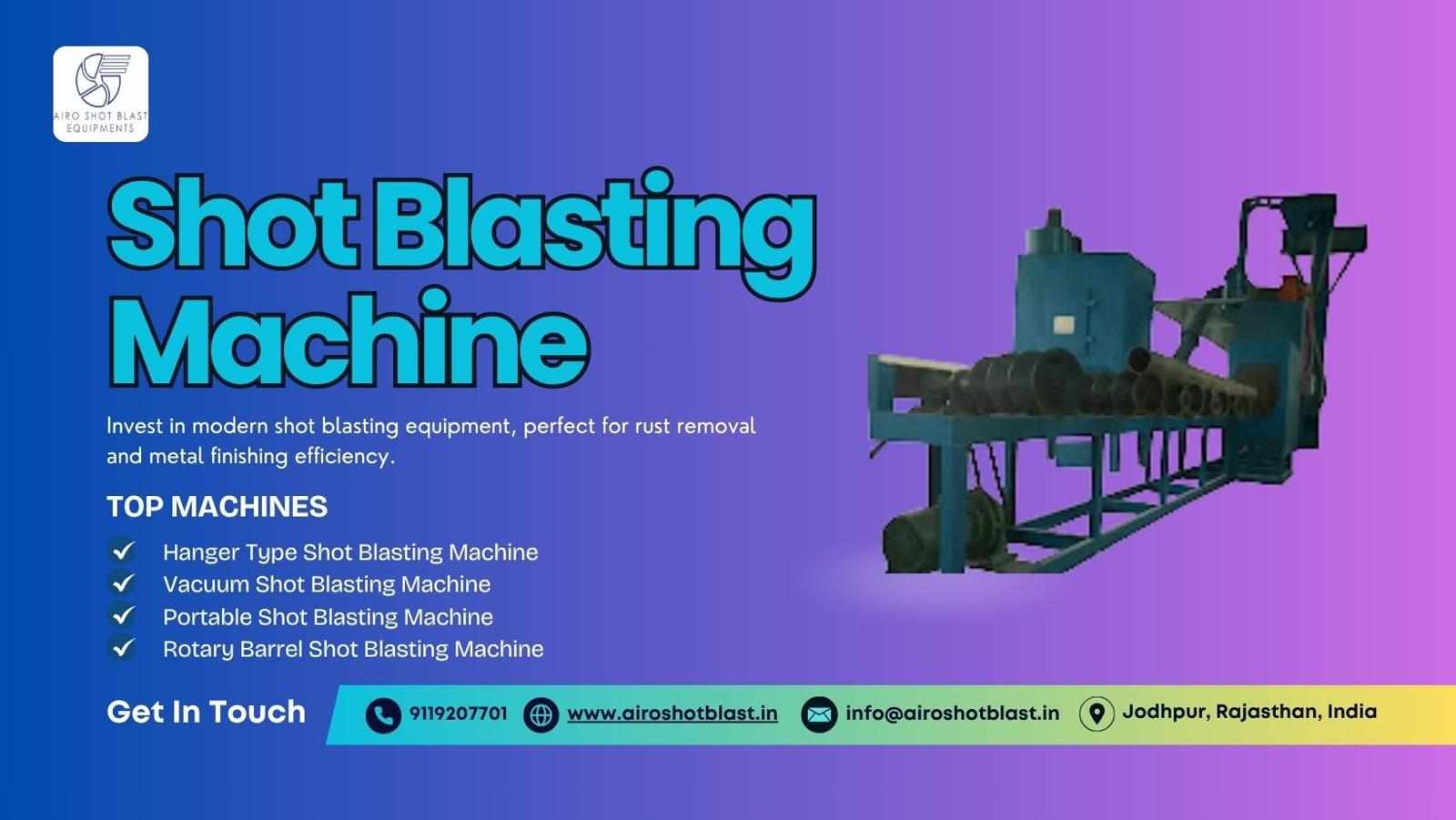
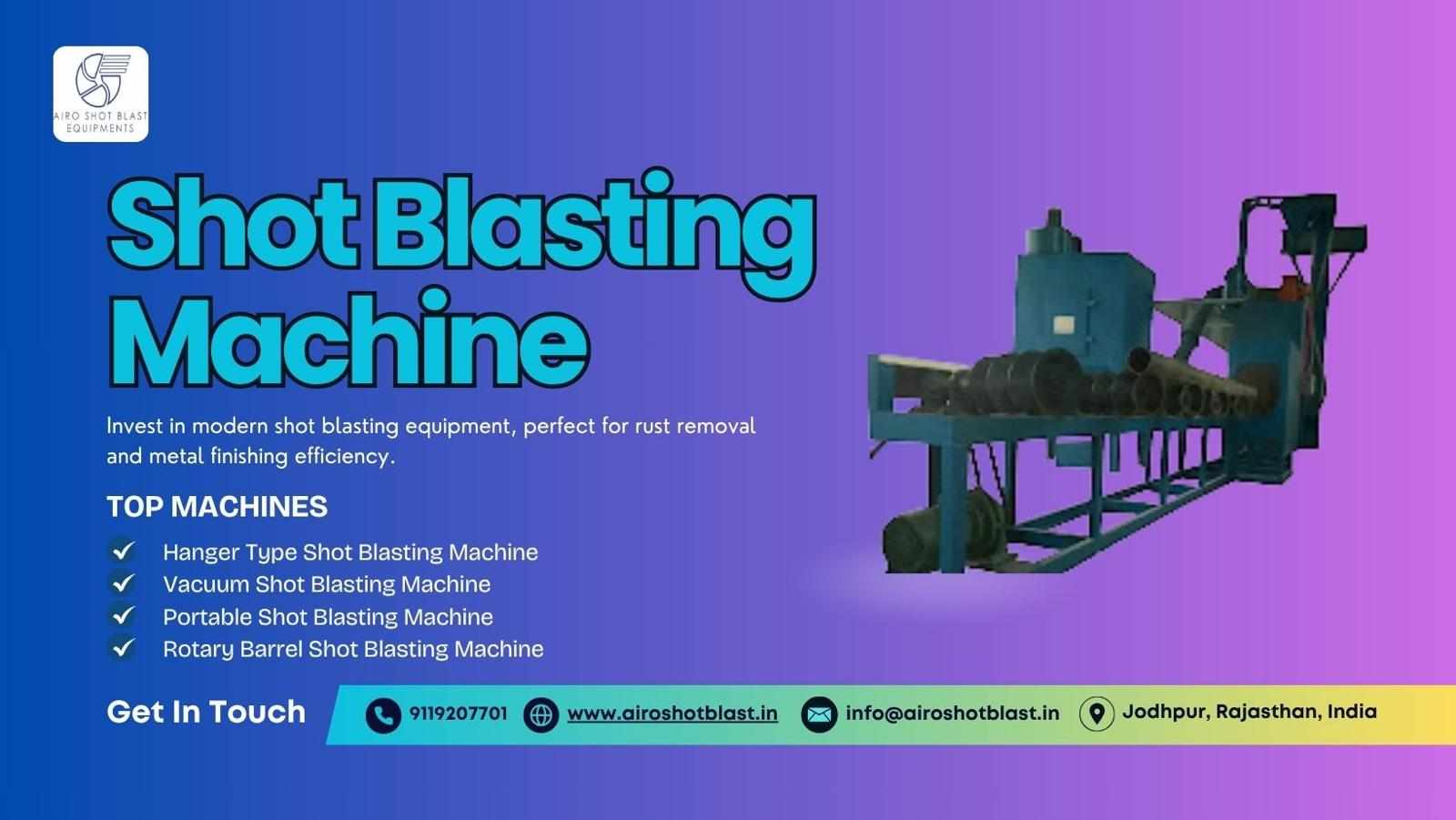
4. Pipe Cleaning Shot Blasting Machine
Pipe cleaning shot blasting machine commonly run at 2500 to 3000 RPM, the highest among machine types.
Reasons for high RPM:
Cylindrical surfaces require intense, high-impact abrasive media velocity.
Higher speed ensures the abrasive stream reaches the entire inner or outer surface uniformly.
Ideal for heavy rust removal and coating preparation.
For industries like oil & gas, infrastructure, and pipeline manufacturing, high RPM ensures both speed and consistency.
What Happens When RPM Is Too High or Too Low?
When RPM is too high:
Risk of surface damage on softer metals.
Increased abrasive consumption.
Higher wear on wheel blades and liners.
Reduced precision for detailed components.
When RPM is too low:
Incomplete cleaning cycles.
Poor surface profile development.
Longer blasting time, reducing productivity.
Risk of uneven surface finish.
Striking the right balance is key, and this is where Airo Shot Blast Equipments prioritizes innovation in wheel design, blade geometry, and motor control systems.
Read More - Shot Blasting Machine Manufacturer
Factors Influencing Blast Wheel RPM Selection
Airo Shot Blast Equipments evaluates several operational variables before recommending RPM:
Material Hardness (steel, aluminum, cast iron, etc.)
Component Geometry (flat, round, hollow, or complex shapes)
Desired Surface Profile (measured in microns)
Abrasive Type (steel shot, grit, mixtures)
Production Speed Requirements
Machine Size and Design
Each machine is engineered to optimize RPM with precise abrasive flow rate for the best possible results.
Explore more - https://www.linkedin.com/pulse/manual-vs-automatic-shot-blasting-whats-best-your-industry-india-jpfxc/
Conclusion
Comparing blast wheel RPM across machine types highlights how each system is engineered for specific industrial needs. Hanger, tumble, table, and pipe blasting machines all require carefully calibrated RPM ranges to balance cleaning efficiency, surface finish, and component safety. With advanced engineering, modern materials, and decades of experience, Airo Shot Blast Equipments ensures that each machine delivers peak performance with optimal blast wheel speed.
Frequently Asked Questions (FAQs)
1. Does higher RPM always mean better blasting performance?
Not always. While higher RPM increases abrasive impact, it may cause excessive wear or damage to delicate components. The ideal RPM depends on material and application.
2. Which machine type typically uses the highest RPM?
Pipe cleaning shot blasting machines generally use the highest RPM, often between 2500 and 3000 RPM.
3. Can RPM be adjusted in all shot blasting machines?
Most modern machines, especially from Airo Shot Blast Equipments, offer adjustable RPM settings, allowing operators to fine-tune performance based on part requirements.
4. How does RPM affect abrasive consumption?
Higher RPM increases abrasive acceleration, leading to faster wear and higher consumption. Controlled RPM settings help optimize both cost and results.
5. What RPM is ideal for general-purpose shot blasting?
For most industrial applications, an RPM between 2000 and 2600 provides balanced cleaning performance.
Closing Segment
When selecting a shot blasting machine, understanding blast wheel RPM is essential to achieving the desired finish, operational efficiency, and equipment life. Airo Shot Blast Equipments continues to innovate and engineer machines that deliver consistent, high-performance results through optimized RPM control. Whether you need high-speed blasting for pipes or precision cleaning for fabricated parts, choosing the right RPM—and the right manufacturer—makes all the difference.





Write a comment ...